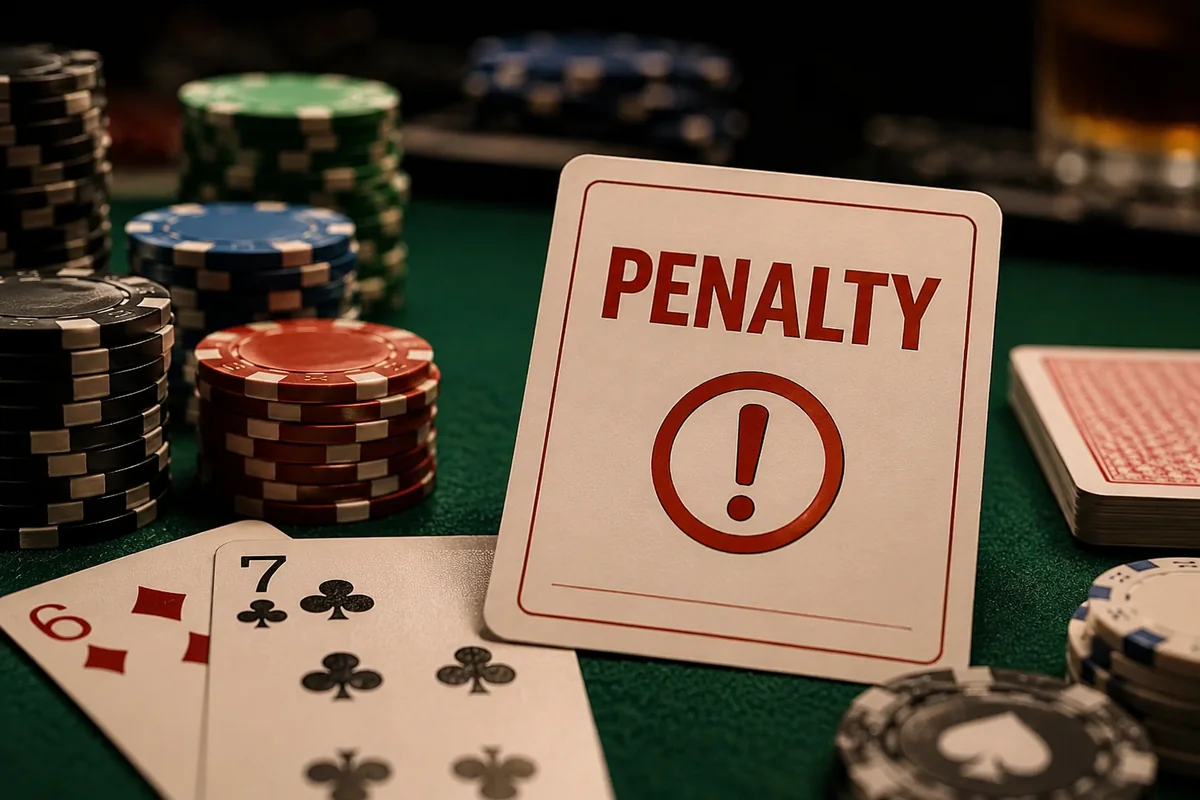
It was only a matter of time, wasn't it? Poker can be a deadly serious business, but jokes and references are part of the fabric of any table. At the Bar Poker Open, though, one well-worn meme cost a player a one-round penalty — proof that even a harmless gag can carry a price at the felt.
So consider this a public-service announcement: even if you do pick up 6♥7♥, it might be wise to keep the references to a minimum.
The Hand That Sparked It
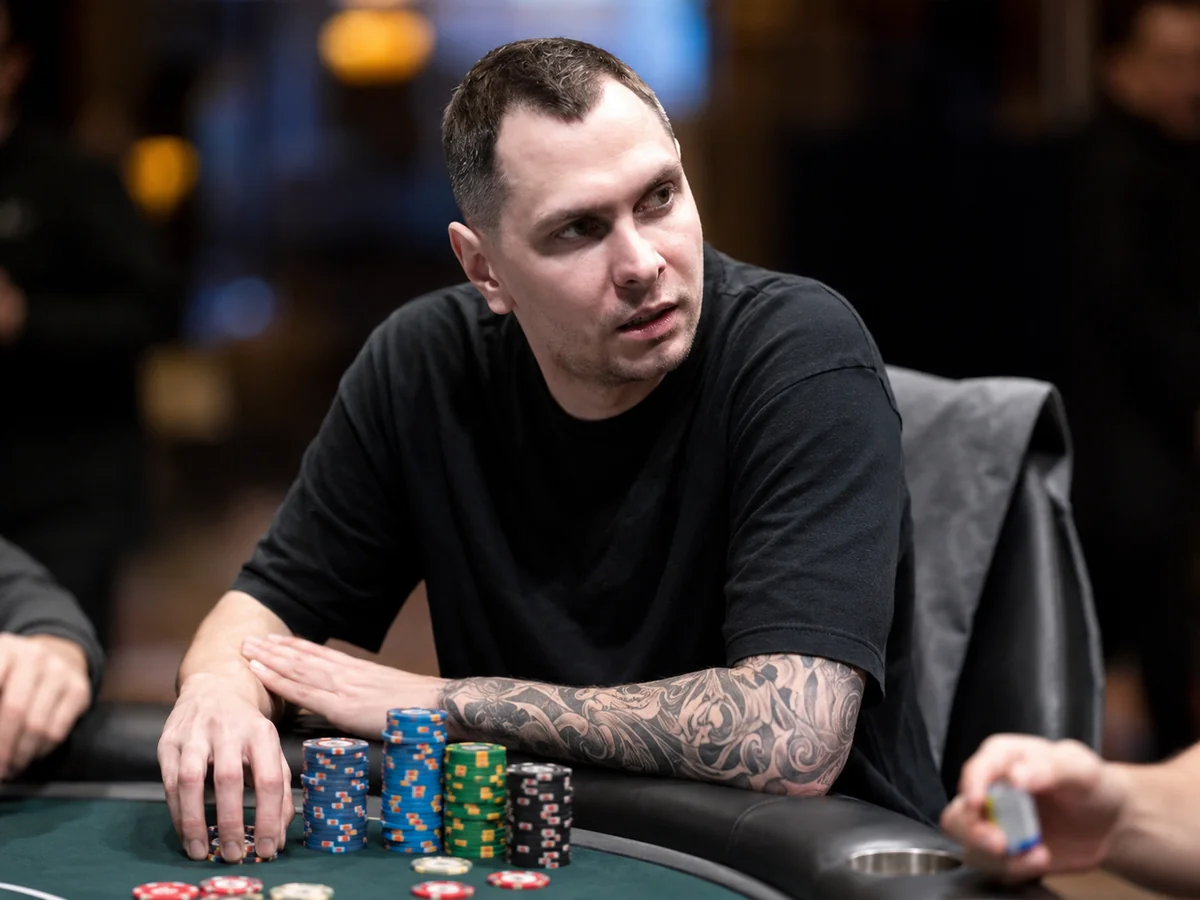
The incident unfolded on Day 2 of the Bar Poker Open, with Joshua Bergman all in from under the gun. The action folded all the way around to Ian Auvil in the big blind.
“Everybody knows what I got,” Auvil announced to the table, flipping up the 7♥ for everyone to see. “Should I play 6x7x one more time?”
That was the dealer's cue to step in. “You cannot be showing your cards,” they said. “Are you calling?” But the damage was done — because Auvil had opened his hand, even if only one card, the floor was summoned.
Auvil then placed the 7♥8♦ face up on the table and explained to the floor that he was simply checking whether he had 6x7x, which he said is his daughter's favorite hand. He insisted it was just a running joke between him and Bergman.
♠️ The verdict
Joke or not, with action still pending, exposing a hand early is a clear breach — and the floor handed Auvil a one-round penalty.
Where "6-7" Comes From
For anyone who has not spent time around children or teenagers recently, "6-7" — said out loud as "six seven" — became one of the most widespread internet memes of 2025. It spread from music and basketball clips into school playgrounds and social media, where it is repeated mostly because it means nothing at all. That is exactly what made it perfect for Auvil's joke: a player holding six-seven of hearts is almost obliged to mention it, which is why the hand has become a running gag at poker tables too.
Why Showing Even One Card Is a Problem
The rule Auvil broke exists for a good reason. When action is still pending, exposing a card gives information to other players who have yet to act, and in some situations it can be used deliberately to influence their decisions. Under the widely used rules of the Poker Tournament Directors Association (TDA), players must protect the integrity of the "one player to a hand" principle, and exposing cards with action pending can lead to a penalty even when the intent is innocent. In this case, Bergman was all in and Auvil was the last to act, so nobody was misled — but floor staff generally apply the rule consistently rather than judge each joke on its merits.
♠️ How penalties work
Tournament penalties usually escalate from a verbal warning to missed hands or rounds, and in serious cases to disqualification. During a round penalty the player must stay away from the table, but cards are still dealt to their seat and their blinds and antes are posted, so the penalty costs chips as well as time.
Poker's Most Notable Penalties
Auvil is in good company. Poker history is littered with players who have run afoul of the floor — some for far more than a card flash.
- Will Kassouf is the first name that springs to mind, having collected numerous penalties over his career — an orbit penalty in 2016 after his now-infamous hand with Stacy Matuson, and a 10-seconds-to-act penalty for perceived slow play in last year's Main Event.
- At last year's WSOP, one player drew a one-round penalty for swearing at a floor manager after refusing to color up, while another was penalized for arguing with floor staff over a possible angle shoot.
- More recently, a player was outright disqualified from the WSOP Europe €5,300 PLO European Championship for being belligerent toward staff and opponents.
- At the same venue three years earlier, Michele Nizzardelli was disqualified from EPT Prague after headbutting an opponent.
And for sheer length, there is an all-timer: one player was reportedly handed a 12-month suspended penalty in Macau some 15 years ago — a sanction that makes a single round on the rail look like a bargain.
A Quick Guide to Table Etiquette
Most penalties at amateur and mid-stakes events come from simple etiquette slips rather than deliberate cheating. A few habits keep players out of trouble:
- Don't act out of turn. Folding, betting or announcing an action before it is your turn can change how others play the hand.
- Don't discuss a hand in progress. Commenting on what someone might hold, or what you folded, while others are still involved is a common source of warnings.
- Protect your cards. Keep them on the table and out of sight, and use a card protector or chip so they are not mucked by mistake.
- Keep chips visible. Large denominations should be clearly visible so opponents can estimate your stack.
- Respect the dealer and floor. Disputes are part of the game, but abuse towards staff is one of the quickest routes to a penalty, as the examples above show.
Penalties also vary from room to room. Major festivals tend to follow the TDA rules closely, while smaller events may give more latitude for a first offence. Auvil's one-round penalty sits at the lighter end of the scale — enough to make a point without spoiling his tournament.
Why Floors Rarely Make Exceptions
It may seem harsh to penalise an obvious joke, but tournament staff have good reasons to be strict. Rules only work if they are applied consistently: a floor that lets one friendly exposure slide will find it much harder to penalise the next player who flashes a card at a more sensitive moment. There is also the risk that "jokes" could be used as cover for passing information between players. Treating every exposure the same way removes the need for staff to guess at intentions, and players generally accept a light penalty more easily when they know everyone is held to the same standard.
The Lesson for Everyone Else
Auvil's penalty will not be remembered alongside Kassouf's or the disqualifications on that list, but it is a useful reminder for recreational players. Table talk is part of the fun, and nobody expects a silent game. The line is crossed only when talk turns into information about a hand while others still have decisions to make. If you must make the "6-7" joke, the safest moment is after the hand is over — ideally once the chips have been pushed.
Related reading
- Straddle Smart: Why Most Players Misuse Poker's Most Misunderstood Move
- Old Man Coffee: How Alex Livingston Created Poker's Most Famous Player Stereotype
- Surveillance Video Shows Sammy Farha Shoving Dealer at Houston Social Cardroom