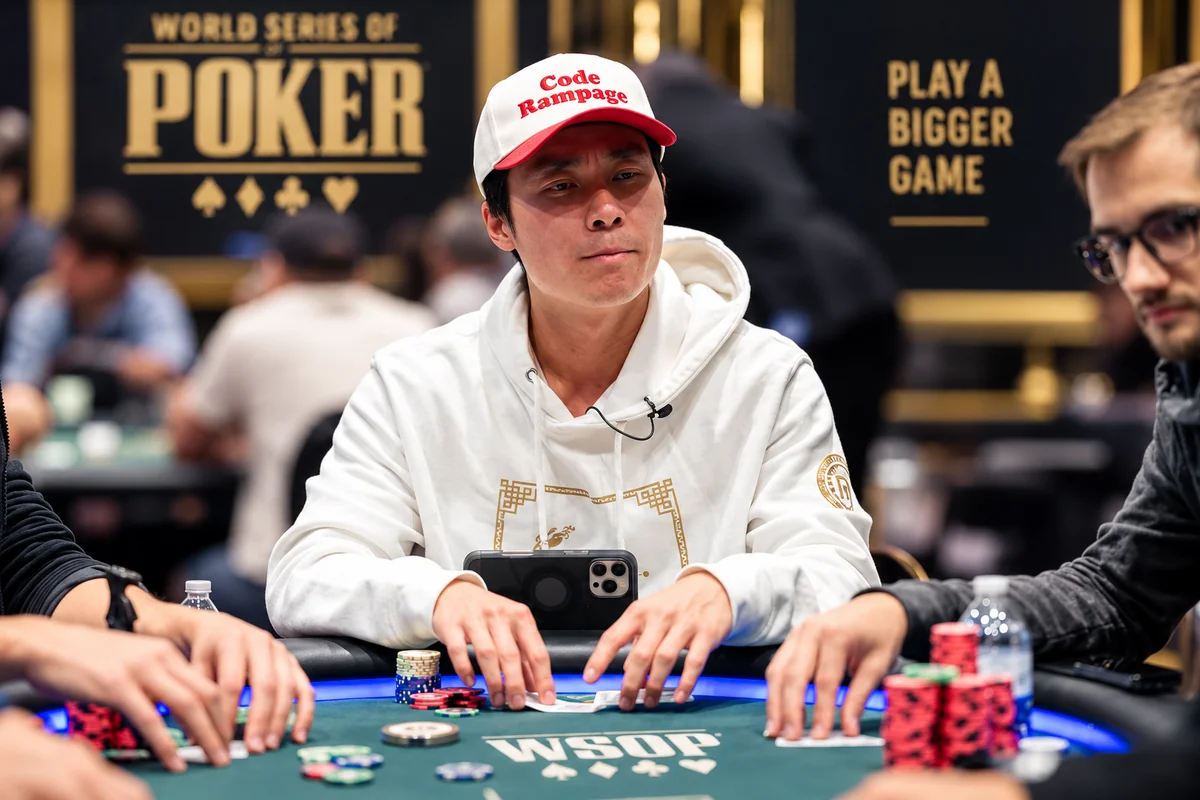
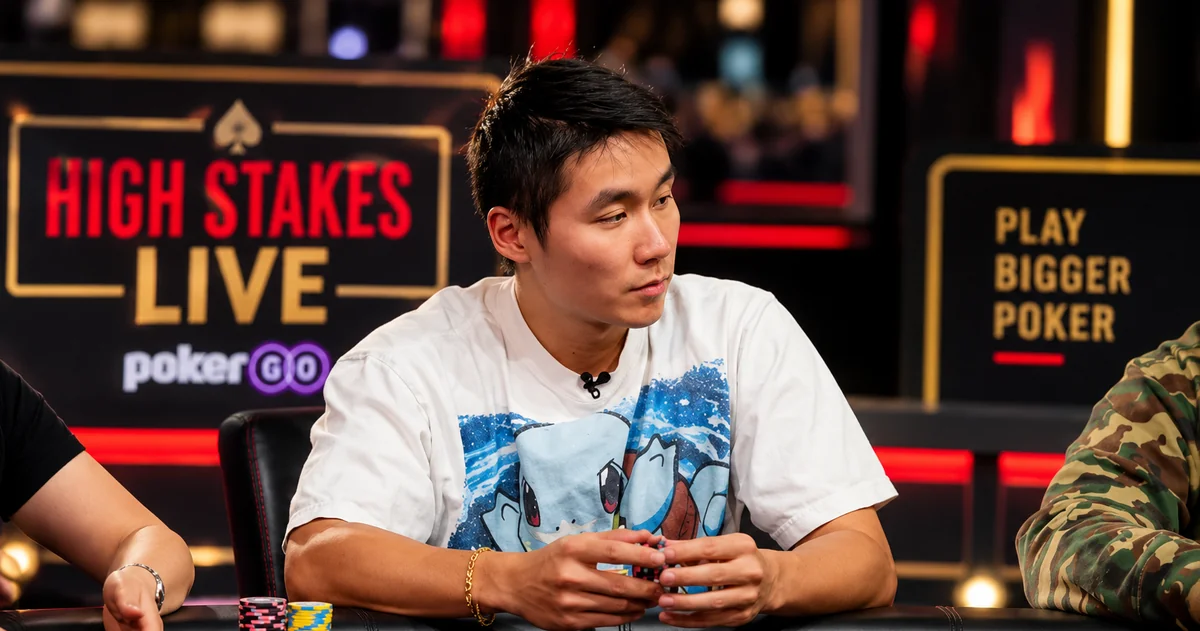
Ethan "Rampage" Yau called the clock on an opponent who had been in the tank for about a minute, then kept taking shots at him for playing too tight — but the numbers, and the final scoreboard, told a very different story.
- Rampage called the clock on Harut during a Hustler Casino Live cash game and kept criticising him afterwards.
- The flashpoint came in a four-way pot where Rampage check-raised to $18,000 with pocket queens.
- The broadcast graphics showed Harut's average tank time was just nine seconds — bang average for the table.
- Harut was the session's biggest winner at +$72,600, with a 46% VPIP.
- Rampage dropped $103,250 on the night.
The Hand That Set It Off
The pot that triggered the exchange started quietly. Francisco Fragoso limped for $100 with pocket fives, Harut came along from the hijack with A♥K♥, and Rampage made it $2,000 from the small blind holding Q♠Q♣. Nik Airball defended the big blind with Q♥J♣, Francisco called, and Harut called too — four players to the flop.
The board came 3♥2♣J♥, giving Airball top pair and Harut a flush draw with two overcards, while Rampage's queens were still in front. Rampage checked, Airball bet $4,000, and Francisco got out of the way. Rampage then came back over the top with a check-raise to $18,000, and the decision landed on Harut.
Harut's decision was far from trivial. With the ace-king of hearts on a board with two hearts, he had a flush draw plus two overcards — a hand that, against a single overpair, is roughly a coin flip or better with two cards to come. Facing a check-raise in a multi-way pot, though, he also had to consider that Airball might continue and that Rampage could hold a set. Calling would have committed a large part of his stack with a drawing hand; folding gave up significant equity. That is exactly the kind of spot where players are expected to take their time.
"Clock, He's Taking So Long"
Harut took roughly a minute to think it over — a perfectly normal amount of time for a $18,000 decision with a hand that has plenty of equity but no made value. Rampage did not see it that way.
"Clock, he's taking so long. We have 30 minutes left. It's just the flop."
— Ethan "Rampage" Yau
When Harut asked whether he was serious, Rampage doubled down: "No, I really want clock. You're taking so long." Harut folded shortly afterwards, and Rampage took down the pot.
How Calling the Clock Works
In most card rooms, any player can ask for a clock if they think an opponent is taking too long. The floor or dealer then gives the player a fixed amount of time — often a minute, with a short countdown at the end — after which the hand is declared dead if no decision is made. Rules vary between venues and streamed games, but calling the clock after about a minute on a large flop decision is unusual, and it is often seen as a way of applying pressure rather than enforcing the rules.
The Stats Didn't Back Him Up
Rampage kept the criticism going on social media after the session, painting Harut as a nit who slowed the game to a crawl. The problem is that the broadcast's own graphics contradicted him: Harut's average time in the tank was nine seconds, right in line with the rest of the table.
His playing stats were not exactly nitty either. Harut finished the stream with a 46% VPIP and a 12% preflop raise percentage — numbers that describe a loose, call-heavy player rather than someone folding his way through the night.
VPIP stands for "voluntarily put money in pot" — the percentage of hands in which a player chooses to call or raise before the flop, excluding forced blinds. A tight player might have a VPIP of 15-20% in a full-ring game; 46% is very loose, the profile of someone who plays a lot of hands. Combined with a 12% preflop raise figure, it suggests Harut was calling frequently rather than folding his way through the session.
The on-screen statistics are one of the features that make modern livestreams so different from older televised poker. Viewers can see each player's tendencies update in real time, which means criticism like Rampage's can be checked almost immediately — and in this case, it was.
Rampage's Summer in Context
The night at Hustler Casino Live was an exception in an excellent year for Yau. In June he won his second WSOP bracelet in the $5,000 Online-Hybrid Championship, beating Adrian Mateos heads-up for $228,825, and he finished the summer series more than $1.3 million up in high-stakes livestreamed cash games. His confidence — and his willingness to needle opponents — is part of what makes him one of the most watched players on the streams. This session simply showed the other side of that persona: when the cards go the wrong way, every comment is replayed, clipped and shared across social media within hours of the stream ending. For a player who has built his brand on content, that is both the opportunity and the risk of playing on camera.
The Scoreboard Had the Last Word
However the argument played out in the moment, the cash-out desk settled it. Harut was the session's biggest winner, up $72,600, while Rampage finished down $103,250 — a six-figure swing in the direction of the man he had been needling.
It is a rare bad night in an otherwise strong run for Rampage, who picked up a World Series of Poker bracelet this summer and has posted a series of big results in high-stakes cash games. On this occasion, though, the player taking his time at the table was also the one taking the money home.
The exchange also says something about how streamed cash games work. Hustler Casino Live, broadcast from the Hustler Casino in Gardena near Los Angeles, thrives on table talk and conflict, and needling an opponent is part of the entertainment. But when the numbers on screen contradict the needle, the audience notices — and the clip of Rampage calling the clock on the night's biggest winner was always likely to be replayed at his expense.
Related reading
- "Rampage" Calls Allen Kessler a "Cancer to This Industry", Offers Heads-Up Challenge
- Former Congressional Candidate Loses $1 Million Poker Pot After Dramatic Comeback
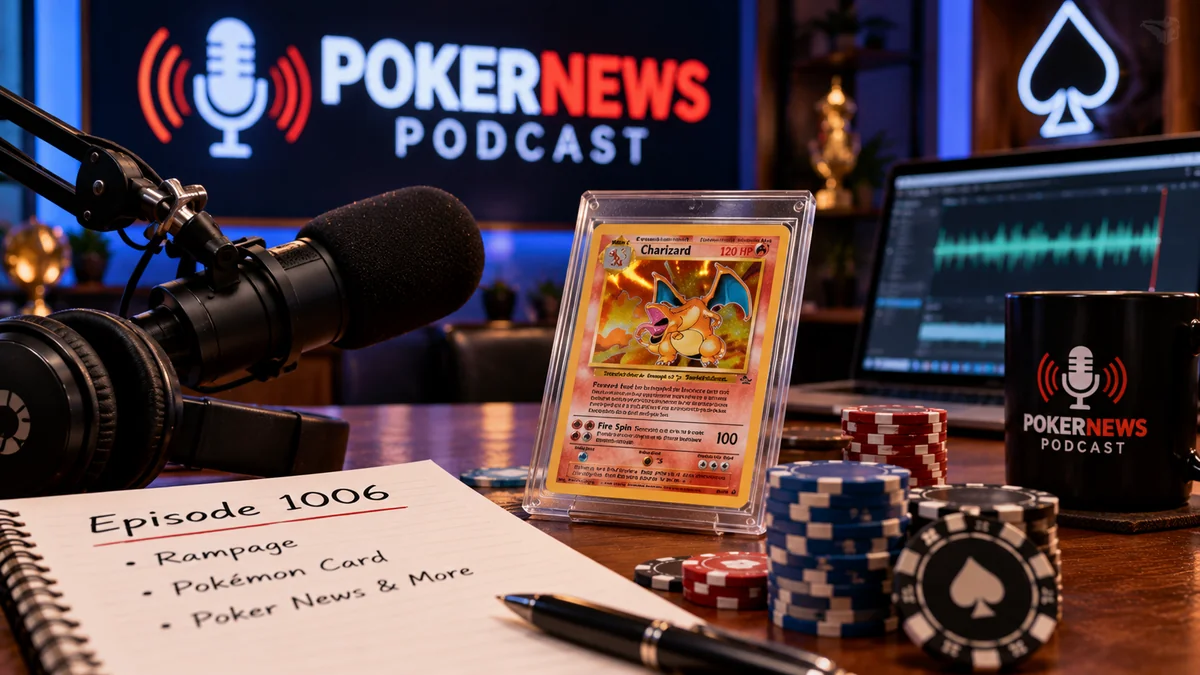
- Rampage Sells Pokémon Card for $700,000 — PokerNews Podcast #1,006